
More than 20 years after the founding of NISMO in 1984, the long history of internal rivalry and integration between Oppama (legacy Nissan) and Omori (legacy Prince) reached its ultimate pinnacle.
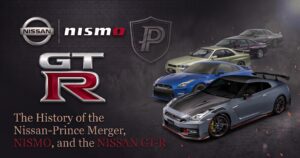
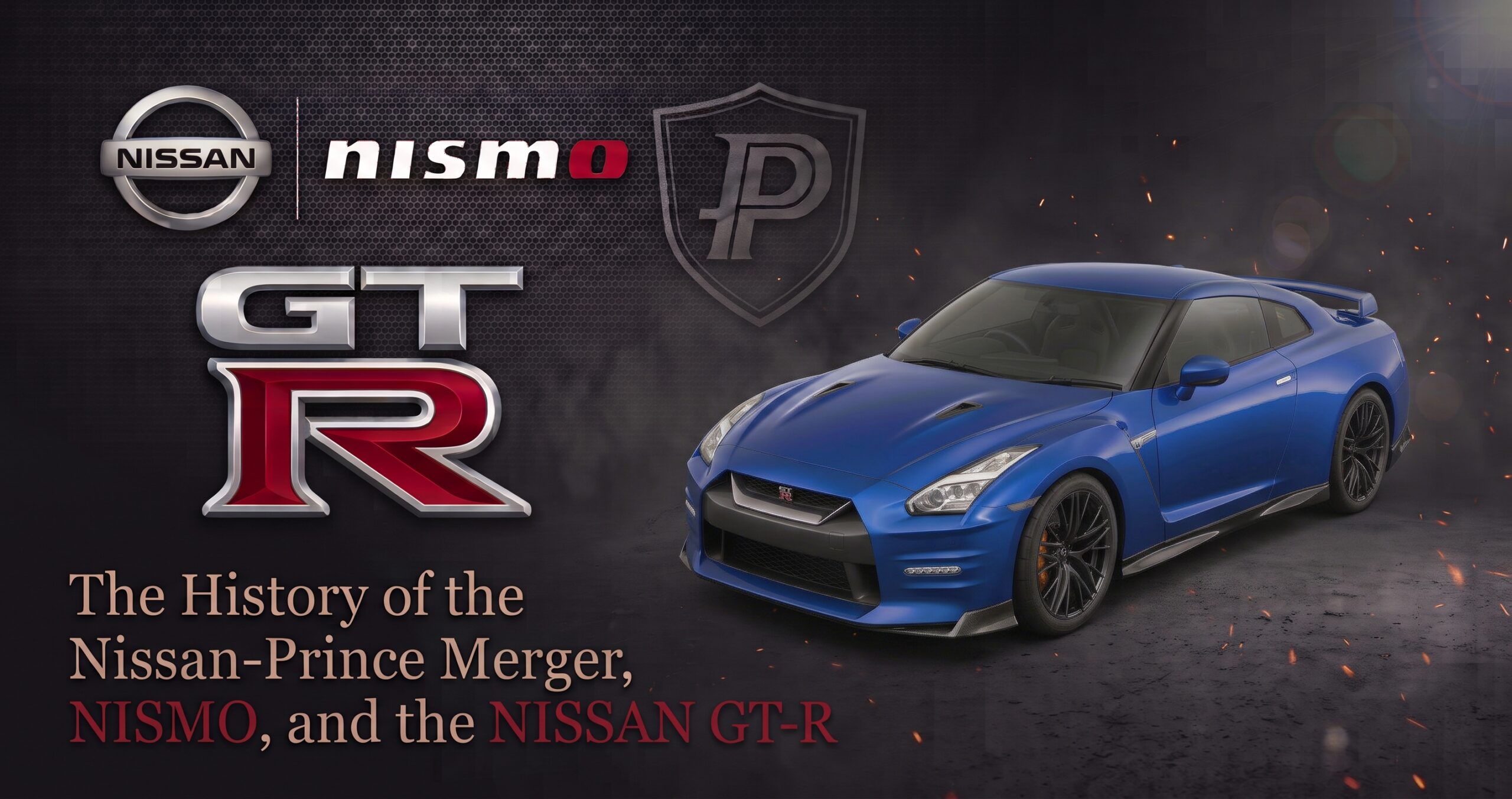
In 2007, independent from the legendary “Skyline” name, a multi-performance, all-weather supercar took the world by storm: the NISSAN GT-R (R35 model).
The man who spearheaded this groundbreaking machine—holding unprecedented, absolute authority across planning, design, engineering, production, and sales—was Kazutoshi Mizuno.
Shinichiro Sakurai, Norihiro Ito, and Kozo Watanabe handed down the bloodline of the Skyline GT-R across generations. How did Mizuno, an engineer whose skills were forged at Oppama, take this rich heritage and NISMO’s racing technology, deconstruct it, and elevate it into the global R35?
1. R32 Architecture and Endurance Racing: The Origins of “Mizuno Logic” Born from a Dual-Career Path
Kazutoshi Mizuno began his career at Nissan Motor Co. in 1972 at “Oppama,” the technical heartland of legacy Nissan.
During the 1980s, under Nissan’s legendary “901 Movement”—a initiative aimed at becoming the world’s leader in chassis engineering by 1990—Mizuno was responsible for vehicle packaging and body design. He was deeply involved in structural packaging for iconic vehicles, including the renowned P10 Primera and the R32 Skyline project led by Norihiro Ito.
In 1989, Mizuno was seconded to NISMO as Team Director and Chief Engineer for the Group C endurance racing program. Under his leadership, the R91CP claimed an overall victory at the 1992 24 Hours of Daytona, while the R92CP set an extraordinary milestone by winning every single race in the All-Japan Sports Prototype Championship.
Upon returning to vehicle development, Mizuno served as Chief Vehicle Engineer for the “FR-L Platform,” which underpinned models such as the V35 Skyline and Z33 Fairlady Z. Through these experiences, he evolved into a master engineer who knew both Oppama’s cutting-edge analytical simulation tools and the cold, hard logic of winning on the race track.
2. A “Single Top Authority” Granted by Carlos Ghosn and a Bold Decision
In the early 2000s, plans for a next-generation GT-R began surfacing within Nissan. However, the internal consensus favored building the car on an extended version of the existing “FR-L Platform.” Mizuno repeatedly turned down offers to lead the project, arguing that “such a car could never serve as Nissan’s true flagship.”
The tide turned in December 2003 when Mizuno was called into a meeting with CEO Carlos Ghosn and presented with an extraordinary offer.
Dubbed “Mr. GT-R” by Ghosn, Mizuno was appointed to a single-leader structure—a “Single Top Authority” that consolidated three roles normally split among separate executives: Chief Vehicle Engineer (CVE), Chief Product Specialist (CPS), and Program Director (PD, responsible for profitability and sales).
With complete authority over a project reporting directly to the CEO, Mizuno committed to adopting the world’s first “Premium Midship (PM) Platform,” a concept he had quietly nurtured for years. Breaking away from its status as a “Skyline derivative,” the GT-R embarked on a new journey as an independent supercar designed to take on the world’s elite performance cars head-on.
3. “Mizuno Theater” and Nürburgring Attacks: Defending the Optimum Weight Theory
Sweeping aside conservative corporate resistance and internal backlash—where testing on domestic Japanese tracks was considered the norm—Mizuno relocated primary dynamic development to the Nürburgring in Germany.
For his lead test driver, Mizuno enlisted former F1 driver Toshio Suzuki, a trusted partner since his F1 days. Implementing an annual “Model Year” evolution system, the R35 GT-R continually shattered lap time records, relentlessly targeting the benchmark set by the Porsche 911 Turbo.
| Year | Manufacturer | Model / Spec | Lap Time | Driver / Notes |
| 2006 | Porsche | 911 Turbo (997.1 / 480 PS) | 7:38.00 | Official Porsche claim (Sport Auto recorded 7:40) |
| 2007 | Nissan | GT-R Base Model (480 PS) | 7:38.54 | Toshio Suzuki (Official test in production specification) |
| 2008 | Nissan | GT-R 2009 Model (480 PS) | 7:29.30 | Toshio Suzuki (Triggered the lap-time controversy with Porsche) |
| 2009 | Nissan | GT-R 2010 Model (485 PS) | 7:26.70 | Toshio Suzuki |
| 2010 | Porsche | 911 Turbo S (997.2 / 530 PS) | 7:32.00 | Official Porsche claim |
| 2010 | Nissan | GT-R 2011 Model (530 PS) | 7:24.22 | Toshio Suzuki |
| 2012 | Nissan | GT-R 2013 Model (550 PS) | 7:18.60 | Toshio Suzuki |
| 2013 | Porsche | 911 Turbo S (991.1 / 560 PS) | 7:24.00 | Official Porsche claim (Sport Auto recorded 7:34) |
| 2013 | Nissan | GT-R NISMO (600 PS) | 7:08.679 | Michael Krumm (Equipped with N-Attack Package) |
| 2017 | Porsche | 911 Turbo S (991.2 / 580 PS) | 7:17.11 | Christian Gebhardt (Sport Auto independent test) |
| 2020 | Porsche | 911 Turbo S (992.1 / 650 PS) | 7:17.30 | Internal Porsche development test measurement |
| 2024 | Porsche | 911 Turbo S (992.2 / 711 PS) | 7:03.92 | Jörg Bergmeister (Equipped with T-Hybrid system) |
The rivalry between the two cars intensified dramatically following the GT-R’s record-breaking runs in 2007–2008 and the subsequent validation dispute ignited by Porsche. Nissan seized the initiative by reaching the 7:08 mark with the GT-R NISMO, while Porsche answered decisively by clocking a 7:03 lap using hybrid technology in the 992 generation. This intense head-to-head competition highlights how each manufacturer continually pushed the other toward rapid engineering breakthroughs.
Mizuno’s articulate, unapologetic, and charismatic communication style was affectionately dubbed “Mizuno-bushi” (the Mizuno doctrine) by automotive media.
When automotive journalists criticized the GT-R’s 1.7-tonne curb weight as overly heavy, Mizuno countered using his proprietary “Optimum Weight Theory”—which posits that a precise vertical load is essential to maximize tire contact grip. During press conferences, he was known to put journalists on the spot, challenging the front row with questions like, “Do you know why we chose 20-inch tires?”—a reflection of his unwavering engineering confidence.
Removing the beloved “Skyline” name from the GT-R was not an abandonment of heritage, but a statement of Mizuno’s conviction as an engineer: the GT-R was ready to stand on its own as a global brand.
4. Conclusion: The Torch Passed to Form “Engineering Nissan” at the World’s Peak
Shinichiro Sakurai poured “human-centric engineering” into the Skyline. Norihiro Ito fought back against harsh criticism to achieve “the resurrection of the GT-R and the dismantling of internal organizational walls.” Kozo Watanabe endured immense pressure to deliver “the complete integration of the second-generation GT-R and NISMO.”
Building upon the momentum that began when he drew the structural blueprints for the R32 during the 901 Movement, Kazutoshi Mizuno harnessed his single-leader authority to forge the R35 GT-R—a machine that earned the respect of supercar manufacturers worldwide.
Because Oppama and Omori once existed as two distinct factions, clashing and pushing each other with fierce pride, Nissan was able to build the technical foundation needed to compete on a global stage.
Behind the R35 GT-R lies half a century of engineers pouring their lives and pride into passing the torch. The culmination of that passion is the miracle named “GT-R”—a legend that continues to command awe on race circuits around the world.