
In Japanese motorsport history, NISMO (Nissan Motorsports International) stands as an undisputed icon. Yet behind the creation of this legendary organization in 1984 lies a dramatic merger between two distinct automotive factions—a story carved deep into Japan’s industrial history.
It all began with the 1966 merger between Nissan Motor Co. and Prince Motor Company. Following the union, two separate motorsport and engineering hubs existed side-by-side under the same corporate umbrella: Nissan’s original base in Oppama (Kanagawa Prefecture) and Prince’s former stronghold in Omori (Tokyo).
Fueled by fierce pride, both camps engaged in an intense internal rivalry. At the spiritual core of the former Prince faction stood an engineer who literally risked his life to refine the Skyline: Shinichiro Sakurai, reverently known as the “Father of the Skyline.”
Human-Centric Engineering vs. The Corporate Giant
Shinichiro Sakurai was an engineer trained in the legacy of Nakajima Aircraft Company, a prominent pre-war aviation manufacturer that gave birth to Prince Motor Company. At the very root of his automotive philosophy was a strict human-centric approach forged through rigorous aircraft development.
Sakurai’s mindset is best summarized by his famous quote:
“Cars don’t lie. An automobile is a machine built by humans that moves exactly as humans intend it to.”
To Sakurai, the Skyline was never merely a machine or a means of transportation. It was a mirror reflecting the mindset and soul of the people who built it. What does the driver feel? How do they want the car to respond? Pursuing those questions to their absolute limit was the founding principle behind every “Sakurai Skyline.”
However, the 1966 absorption of Prince by Nissan completely transformed his working environment.
While the Prince faction prioritized an unyielding pursuit of technical perfection, the Nissan establishment favored corporate rationality and production efficiency. Legacy Prince engineers were often treated as “outsiders” (tozama). Whenever corporate debates arose around streamlining models, an invisible pressure loomed large: the Skyline might be canceled.
Even so, Sakurai refused to play corporate politics.
“If they have a problem with us, we’ll silence them on the track.”
He stood by his conviction of human-centric craftsmanship, delivering machines built to the ultimate level of perfection regardless of internal pressure. To shield the Skyline and protect his team’s pride against cold corporate stares, Sakurai pushed himself to his limits, standing tall against the waves of a giant corporation.
50 Consecutive Victories: The “Hakosuka GT-R” Born from Internal Rivalry
Following the 1966 merger, Nissan’s mainstream “Oppama” division and Prince’s “Omori” division competed as two completely separate teams—despite both being part of Nissan. Statements from team members at the time reveal that setup data and technical know-how were strictly kept secret from one another.
On the surface, this might have looked like redundant investment or futile infighting. Yet this internal friction became the exact engine that drove Nissan Motorsport’s technology forward at a breakneck pace.
When one side developed a new engine or suspension setup, the other responded with superior technology. Before battling external rivals like Toyota or Mazda, they refined their craft to the limit against their rivals in the same hallway.
“We cannot lose to Oppama’s Fairlady Z or Sunny. Above all, we must never let the Skyline die.”
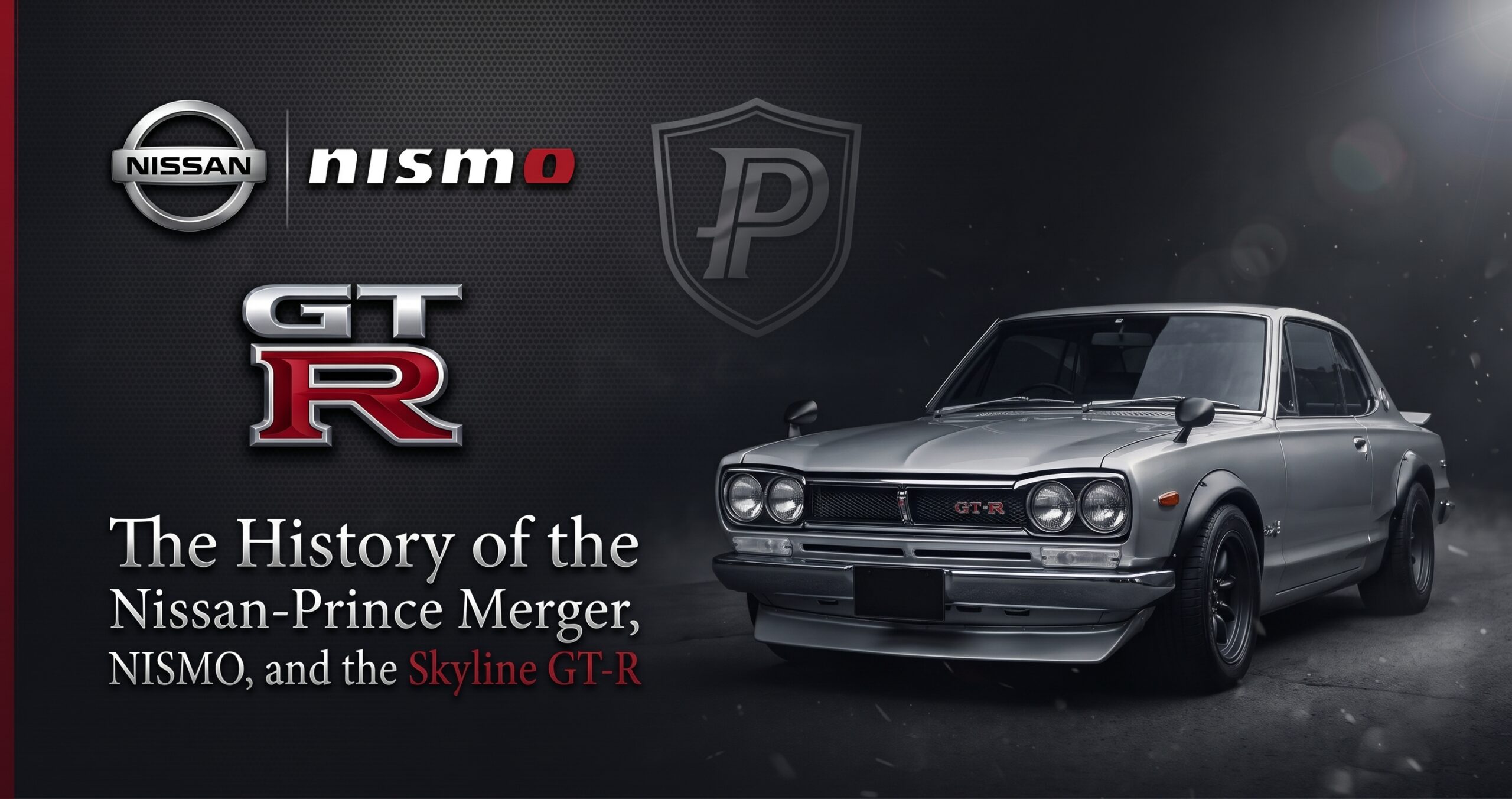
Driven by this fierce determination, Sakurai and the Omori team unleashed the legendary “Hakosuka GT-R” (PGC10/KPGC10). Powered by the DOHC S20 engine derived from the R380 prototype racer, the Hakosuka GT-R achieved an unprecedented 50 consecutive victories on the track.
Without needing words, the overwhelming results on the circuit demonstrated the engineering prowess and undeniable presence of the former Prince team to the entire world.
Sudden Illness and Passing the Torch
With every new generation of the Skyline, the burden on Sakurai as Chief Development Engineer grew heavier.
In the mid-1980s, as development of the 7th-generation Skyline (R31 model) reached a critical phase, Sakurai suddenly fell ill. The torch of the R31’s development was passed to his top protégé, Norihiro Ito.
That very same year, in 1984, Nissan’s Motorsport Development Department in Oppama and the Omori Branch were officially merged, giving birth to modern-day NISMO. Through an era of fierce rivalry and mutual refinement, the aesthetic of performance that Sakurai gave his life to protect was successfully handed down to a new organization and a young generation of engineers.
Conclusion: The Legacy of Shinichiro Sakurai
Looking back at historical records and first-hand accounts, the clash between Oppama and Omori was far more than simple corporate politics; it was a battle of pride between dedicated engineers.
Shinichiro Sakurai’s uncompromising craftsmanship and rebellious passion ignited a fire in the Oppama engineering team as well. As both sides pushed each other to greater heights, they built the very foundation of NISMO—a world-class motorsport brand.
Behind the enduring charm of the Skyline and NISMO today lies the passionate drama played out by these legendary engineers of Japan’s Showa era.