
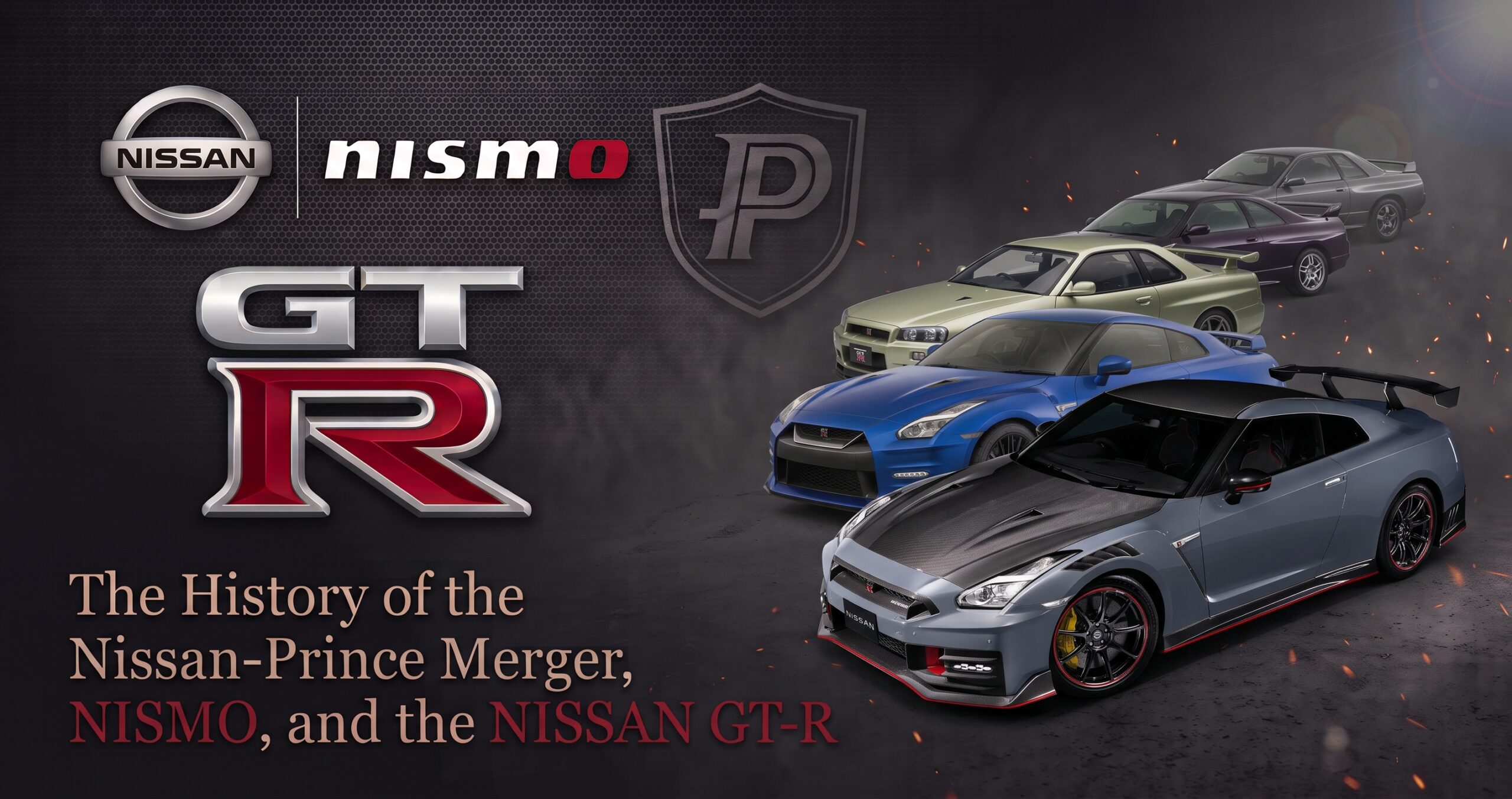
September 17, 1984, marked a monumental turning point in the history of Nissan motorsport: the official founding of Nissan Motorsports International Co., Ltd. (famously known as NISMO).
Prior to that date, Nissan’s motorsport operations functioned under a dual-tier structure across two distinct bases: the “Oppama Works” (Special Vehicle Experiment Department inside the Oppama Plant, acting as the Tier-1 factory team) and the “Omori Works” (Advertising Department No. 3 Omori Branch, handling customer support, sports parts sales, and Tier-2 activities).
Established to unify and streamline these two separate entities using the facilities at Omori, the heavy responsibility of serving as NISMO’s inaugural president was entrusted to Yasuharu Namba—a legendary leader who had long commanded Oppama Works and established the era of “Rally Nissan.”
1. The Miracle of “Fuji-go”: The Man Who Shocked the World in Australia
Yasuharu Namba, who joined Nissan Motor Co. in 1948, first made his mark on the world stage through a legendary challenge in August 1958.
Nissan entered two Datsun 210 models—nicknamed “Fuji-go” and “Sakura-go”—into the 6th Mobilgas Trial (Round-Australia Rally), a brutal 17,000-kilometer endurance event widely regarded at the time as the most grueling rally in the world. The objective was to test vehicle durability under extreme conditions and gather technical data for future passenger car export planning to the United States.
Under team manager Yutaka Katayama’s leadership, Namba took the wheel as driver and faced immense trials.
Due to lingering technical ties with Britain’s Austin Motor Company, the Datsun 210 required two separate sets of tools: inch-standard tools for the engine and metric-standard tools for the chassis. With no dedicated support vehicles, Namba and his team tackled the unpaved wilderness weighed down by duplicate tool sets and heavy spare parts. Meanwhile, Volkswagen, which swept the top podium spots, maintained its cars with fully equipped parallel support vans.
Despite the punishing terrain, Namba and his crew pushed through the mud to achieve a remarkable double finish: Fuji-go took a class victory (24th overall), while Sakura-go finished 4th in class. It was the first international victory for a Japanese automobile following World War II, drawing immense acclaim at the New York Auto Show the following year and establishing the foundation for Nissan’s U.S. export strategy.
The lessons learned on those Australian roads—the vital importance of a robust service system and absolute reliability—became the cornerstone of the golden age of “Rally Nissan” and the founding spirit of NISMO’s customer support philosophy.
2. A Crew of 51: “Strong NISMO, Winning NISMO”
On October 1, 1984, NISMO officially began operations at its Omori headquarters with a lean staff of just 51 employees.
The new company was tasked with a wide-ranging mandate:
- Participation in domestic and international races and rallies
- Support and backup for privateer racing teams
- User services, including running racing driver schools
- Development and sales of performance sports parts
- Provision of motorsport information and technical data
To weld Oppama’s advanced factory engineering with Omori’s grounded, hands-on customer service mentality into a single cohesive force, President Namba introduced a defining corporate motto: “Strong NISMO, Winning NISMO.”
Transcending past emotional rivalries between legacy Prince and legacy Nissan personnel, Namba led his 51 elite staff using the grit, determination, and service philosophy he had forged in the Australian bush. Under his clear vision, the organization’s internal energy coalesced around a singular mission: winning on the world stage.
3. Taking On the World: Entering the 24 Hours of Le Mans
In 1985, its second year of operations, NISMO launched its full-scale factory racing programs under Namba’s leadership:
- Group A: Debuted with the R30 Skyline RS Turbo in the All Japan Touring Car Championship, laying the groundwork for the R32 GT-R’s legendary 29-consecutive-race winning streak.
- Group C and Le Mans: After taking an overall victory at the 1985 WEC in Japan, NISMO realized its long-held dream in 1986 by competing in the 24 Hours of Le Mans for the first time, finishing 16th overall with the March-Nissan R85V.
- WRC and Overseas Rallies: Claimed an overall victory at the 1988 Ivory Coast Rally in a Nissan 200SX (Silvia).
From achieving Japan’s first overall win at the 24 Hours of Daytona in 1992 with the R91CP to his retirement in 1994, Namba served as NISMO’s commander-in-chief, elevating Nissan to the pinnacle of global motorsport.
4. Conclusion: The Master Strategist Who Crystalized Two Factions into “NISMO”
Without the presence of Yasuharu Namba, the division between Oppama and Omori might have dissolved into unproductive internal strife. Instead, Nissan’s motorsport functions merged seamlessly into NISMO, evolving into one of the world’s most formidable racing organizations.
Namba combined the passion of a driver who gripped the wheel through the Australian wilderness with the exceptional leadership of a master team principal.
The legacy of “passion and technical inheritance” he established as NISMO’s first president continues to beat strongly inside Nissan’s motorsport DNA, more than 40 years later.