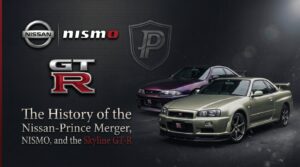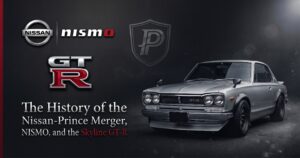

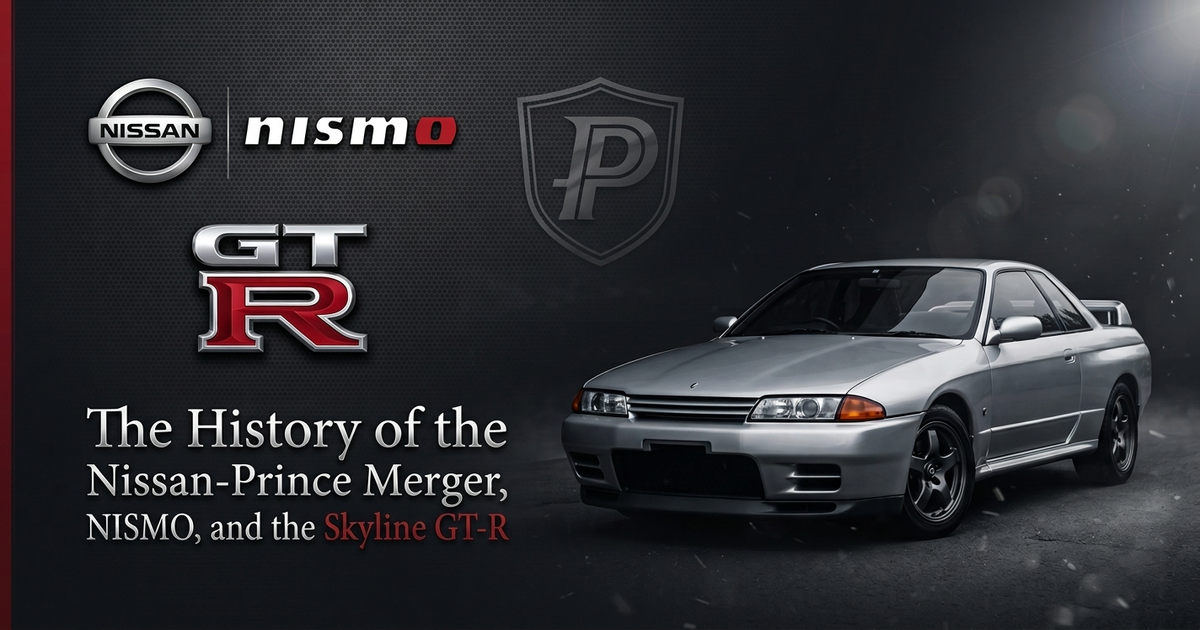
In 1984, Nissan Motor Company’s motorsport division reached a monumental turning point. The racing departments of Nissan’s original base in Oppama (Kanagawa) and Prince’s former stronghold in Omori (Tokyo) were consolidated to form modern-day NISMO (Nissan Motorsports International).
However, two organizations that had competed fiercely as rivals for years could not simply unite overnight. Invisible barriers and tension lingered within the company.
Amid this turbulence, one man was suddenly entrusted with the leadership of Skyline development: Naganori Ito, the top disciple of Shinichiro Sakurai—reverently known as the “Father of the Skyline.”
Stepping in after his mentor’s sudden illness, shouldering the frustration of harsh criticism for a model he did not directly design, and engineering the revival of the legendary “GT-R” after a 16-year absence—this is the story behind the birth of the iconic R32 GT-R, a masterpiece breathed into life by Naganori Ito.
1. Frustration Over the R31 and Facing Harsh Criticism
In the autumn of 1984—just six months before the unveiling of the 7th-generation Skyline (R31 model)—Shinichiro Sakurai fell ill during the final stages of development. Naganori Ito was urgently appointed as Chief Engineer to succeed him.
At this late stage, however, there was no room to alter the fundamental design of the vehicle. The work that actually fell to Ito consisted mostly of final administrative procedures, such as government certification applications.
In August 1985, the R31 model (7th-generation Skyline), designed with a focus on comfort and interior space, made its debut. While it was a highly refined passenger car, passionate fans expressed wave after wave of disappointment, complaining that it “wasn’t like a Skyline.”
“That might be the correct answer for a Laurel, but it’s not the right answer for a Skyline. What fans want is a sense of tight focus and density.”
Although he had not designed the car from scratch, Ito stood alone as the new Chief Engineer to face the full responsibility and disappointment of the fanbase. Yet this painful experience instilled in him an unshakeable obsession: to return the Skyline to its authentic identity.
Looked at another way, because the R31 had been poorly received by the market, there was nothing left to lose. The environment was ripe for bold, decisive moves.
The essence of the Skyline was, above all, driving performance. Ito made his resolve and decided to take personal command from the earliest stages as Chief Engineer for the upcoming 8th-generation “R32 model.”
His goal was to restore an exhilarating, responsive driving experience across the entire lineup—from the entry-level 1,800cc model to the range-topping flagship. And to prove that performance on a global stage, he planned the revival of the “GT-R” for the first time in 16 years, aiming to conquer the world-famous Group A racing category.
2. Breaking Down the Walls Between Oppama and Omori: The Path to Total Group A Victory
When development began, however, NISMO had only just been formed, and emotional friction between the former Nissan (Oppama) and former Prince (Omori) camps still lingered. Ito, coming from the former Prince lineage, faced caution and pushback from within the company regarding his push to “revive the GT-R to win.”
To tear down these internal walls, Ito chose to cast aside past conflicts and merge the strengths of both sides into “One Nissan”:
- Adopting Advanced Oppama Technologies: He aggressively incorporated Nissan’s cutting-edge electronic all-wheel-drive system (ATTESA E-TS) and advanced structural analysis techniques.
- Combining Omori Craftsmanship with Experimental Testing: He collaborated closely with test engineering teams at the Tochigi and Oppama proving grounds, as well as the newly established NISMO, conducting extreme durability testing at Germany’s Nürburgring.
United under the common goal of winning on the race track, Omori’s racing spirit and Oppama’s advanced technology joined hands. In 1989, the R32 Skyline GT-R was born.
In the All Japan Touring Car Championship (JTC) starting in 1990, the R32 GT-R achieved an unprecedented feat: winning all 29 races it entered over four seasons. Bringing the legendary 50-victory streak of the original “Hakosuka” back to life in the modern era, it became a moment of glory seized together by engineers from both Oppama and Omori.
3. Conclusion: Reaching Beyond the Mentor’s Teachings to Form “One Nissan”
By standing on the front lines of unreasonable criticism during the R31 era and transforming that frustration into driving force, Ito was able to cross organizational boundaries and bring forth the miraculous masterpiece that was the R32 GT-R.
Naganori Ito’s achievement in protecting the “soul of driving” inherited from his mentor, Shinichiro Sakurai, and elevating Nissan back to the top of the world lives on to this day within the motorsport DNA of NISMO.